
Improve your law enforcement skills with our online training courses. Designed to support professional development and provide easy access to essential information, our courses are the perfect way for officers to stay current in their field.
Course Search Button

Course Area

Course Area

Connecticut Juvenile Law (26-12-8-C1)

‣ Instructor: Attorney Joseph Race
‣ Credit Hours: 2
In this course, Attorney Joseph Race covers the rights of juveniles, the disposition of juveniles taken into custody, juvenile court procedures, proper attitudes, methods, and techniques that an officer should use when dealing with juveniles. The societal pressures of adolescents, characteristics and problems of youths will also be covered, as will the need for strong juvenile community relations and an overview of the community agencies that work with youths.

From Adoption to Accountability: Building Defensible Oversight of Police Technology (26-10-3-A1)

‣ Instructor: Attorney Joseph Race
‣ Credit Hours: 1
This seminar will address law enforcement agencies' challenges as they amass new technological products. As artificial intelligence continues to reshape modern policing, understanding its role in report writing is essential for today’s law enforcement professionals. AI to Z is a dynamic and practical course designed to introduce officers to the evolving use of AI in the development, review, and documentation of law enforcement reports.

Tech-Ready Policing: Policy Essentials for Emerging Technology (26-10-2-A1)

‣ Instructor: Attorney Joseph Race
‣ Credit Hours: 1
This seminar will address law enforcement agencies' challenges as they amass new technological products. As artificial intelligence continues to reshape modern policing, understanding its role in report writing is essential for today’s law enforcement professionals. AI to Z is a dynamic and practical course designed to introduce officers to the evolving use of AI in the development, review, and documentation of law enforcement reports.

Current Trends in Technology: What is a Reasonable Expectation of Privacy Today? (26-04-2-A1)

‣ Instructor: Attorney Eric P. Daigle
‣ Credit Hours: 1
This seminar will provide an overview of technology law, focusing on the Expectation of Privacy. The Supreme Court of the United States first established legal standards for this concept back in 1967. However, with the rapid expansion of technology since then, the law has struggled to keep up and provide clear guidance to officers under the Fourth Amendment.

Digital Evidence Decoded: Changing How You See Every Case (26-63-5-A1)

‣ Instructor: Detective Sergeant Kevin A. Connolly
‣ Credit Hours: 1.5
This session is designed to give all officers the foundation for identifying both physical and cloud based digital evidence that is paramount in today’s criminal investigations. We will cover the ever-changing world of cell phone seizure, extraction, and analysis; to include consent searches and search warrants. Participants will be instructed on how to utilize the tools necessary to research, preserve, and request data from the various cell service providers, social media platforms, and other service providers. At the conclusion of this session there will be a demonstration of how this evidence can be presented in the courtroom to tell the story the digital data has provided.
Drone Use by Law Enforcement: The 400′ View (26-61-5-A1)

‣ Instructor: Mickey H. Osterreicher, Esq.
‣ Credit Hours: 1
This seminar will explore ways departmental guidelines and procedures should be established before such uses. An overview of the latest FAA and state regulations will be provided, along with a discussion of the benefits and risks posed by drones during emergencies and search and rescue operations, as well as best practices and next steps in law enforcement drone operations. 

Legal Update: 2021-22 Connecticut Supreme Court Update (23-25-2-C1)

‣ Instructor: Attorney Eric P. Daigle
‣ Credit Hours: 0.5
State v. Rolon, 337 Conn. 397 (2021) State v. Correa, 340 Conn. 619 (2021) State v. Griffin, 339 Conn. 631 (2021) State v. A.B., 341 Conn. 47 (2022) State v. Lopez State v. Tyus, 342 Conn. 784 (2022) State v. Police, 343 Conn. 274 (2022) State v. Samuolis, 344 Conn. 200 (2022)

2020 Connecticut Legal Update (20-09-2-C1)

‣ Instructor: Attorney Eric P. Daigle
‣ Credit Hours: 1
The 2020 legal update reviews Public Acts, a United States Supreme Court case, CT Supreme Court, Second Circuit Court of Appeals, and the CT Appellate Court.

CT Leadership for a Lifetime (21-07-2-C1)

‣ Instructor: Paul Butler
‣ Credit Hours: 2
In this motivational keynote, speaker Paul Butler covers what it takes to be a good professional and highlight the power of being a good person. We will focus on how to take individual talents and apply them to a group setting to make an unstoppable and productive team.

CT Ethics for Law Enforcement: Introduction (20-10-1-C1)

‣ Instructor: Attorney Eric P. Daigle
‣ Credit Hours: 2
help define the role of ethics in law enforcement. It will identify the officers’ role in relation to ethics within an organization. It is important for officers to understand the necessity for high standards of ethical and moral behavior on the part of the law enforcement officer on and off duty.

CT Civil Liability: What Officers Need to Know (20-04-2-C1)

‣ Instructor: Attorney Eric P. Daigle
‣ Credit Hours: 2
This course is introductory and focuses on legal analysis, guidance, and interpretation of current laws. The topics will address agency liability and current police practices in effective and constitutional operations.

CT Social Media & First Amendment Implications (25-53-2-C1)

‣ Instructor: Attorney Eric R. Atstupenas
‣ Credit Hours: 1.5
This course will cover an overview of government employee free speech and how to evaluate a department’s ability to investigate and discipline officers when they post on social media, blogs, or department intra-net.

CT Qualified Immunity 2022 Update (22-11-2-C1)

‣ Instructor: Attorney Eric P. Daigle
‣ Credit Hours: 1.5
This course is designed to explain Qualified Immunity and its application as a type of legal immunity. Training will review U.S. Supreme Court rulings and provide clarity on the October 2021 rulings in Rivas-Villegas v. Cortesluna and City of Tahlequah v. Bond.

CT Community and Police Relations (21-08-4-C1)

‣ Instructor: Lawrence A. Terra, Esq.
‣ Credit Hours: 2
This course features Assistant Chief Lawrence Terra as he focuses on the policing crises that we face today regarding an ever-growing lack of trust and confidence from our communities.

CT Rape Crisis/Sexual Assault (24-45-5-C1)

‣ Instructor: Attorney Eric P. Daigle
‣ Credit Hours: 2
This course will cover sexual assault statutes, special concerns relative to the interviewing of sexual assault victims, rape crisis intervention techniques, specific investigative methods to be used in sexual assault cases, as well as the collection and preservation of sexual assault evidence.

CT Domestic Violence (23-16-6-C1)

‣ Instructor: Attorney Eric P. Daigle
‣ Credit Hours: 2
This course will assist officers in understanding and complying with model policy procedures and response intervention guidelines.

CT Gangs and Gang Violence (26-23-6-C1)

‣ Instructor: Captain Dan Papoosha
‣ Credit Hours: 2
This presentation covers the structure, culture, and dynamics of prominent gangs and their subsets, gang activity and rivalries, and significant aspects of identification.

CT Introduction to Human Trafficking (23-17-5-C1)

‣ Instructor: Attorney Eric P. Daigle
‣ Credit Hours: 1
Retired Connecticut State Trooper Art Walkley leads this one-hour course on human trafficking. It covers the types, legislation, and detection of trafficking in Connecticut, including the role of the internet and effective response strategies. Walkley’s experience with the FBI and Homeland Security enriches the session, focusing on victim support and investigative techniques.

CT Bigotry and Bias Crimes, Procedural Justice (21-05-5-C1)

‣ Instructor: Attorney Eric P. Daigle
‣ Credit Hours: 3
This course breaks down the classifications, statistics, and data of hate crime offenses against persons, property, and society, and discusses how law enforcement can help their communities through its role in addressing the rise in hate crimes.

CT Body Worn Cameras (22-10-5-C1)

‣ Instructor: Attorney Eric P. Daigle
‣ Credit Hours: 1.5
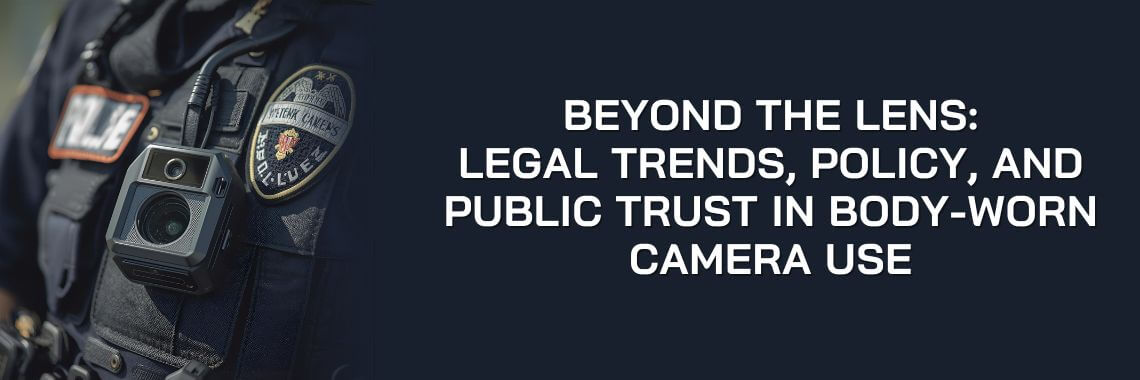
This course will highlight the history of body worn cameras in law enforcement and areas of concern. Legal and privacy issues will be clarified through a review of First and Fourth Amendment implications.

Continue Your Education

Daigle Law Group's online Law Enforcement and Police Training Courses offer an engaging, cost-effective, and easy way to stay current with your training requirements.

Thank you for your commitment to professional growth and your dedication to staying up to date with the latest in policy and police practices. Click the button below to access our POSTC-50 Review Training Credit Form generator.
For assistance, please email help@dlglearningcenter.com or contact support.